
The future of butcher shops: 2046 Independent butcher shops will still exist in 20 years?, but the traditional butcher shop that simply sells meat by the kilo will be under enormous pressure. With supermarkets and strip-shopping-centre retailers competing on price, convenience and opening hours, butchers will need to offer something those businesses struggle to replicate.
The big question is whether a butcher remains a place to buy meat or becomes a place to get a better meal, better advice and a better experience.
What will change over the next 20 years?
1. Fewer ordinary butcher shops
Supermarkets will continue to put pressure on everyday products such as mince, sausages, chicken breast and basic steak cuts. Smaller operators with high rents, wages and energy bills may struggle to match supermarket prices.
The most vulnerable shops will be those selling much the same products as everyone else, with price as their main selling point.
2. Specialists will have a reason to survive
Premium beef, dry-aged steaks, specialty sausages, unique marinades, quality lamb and expertly prepared cuts give customers a reason to choose an independent butcher.
Customers won’t necessarily expect the cheapest price. They’ll expect a noticeable difference in quality, service or taste.
3. Butchers will increasingly sell meal solutions
Imagine walking into a shop and buying a complete dinner rather than just raw meat: seasoned kebabs, stuffed chicken, slow-cook beef, ready-to-roast meals and barbecue packs.
This helps independent shops compete on convenience instead of trying to beat supermarkets on every individual price.
4. Technology will run more of the business
Digital ordering, customer databases, demand forecasting, automated stock tracking and online subscriptions could reduce waste and make smaller shops more efficient.
But the technology that matters most may be behind the counter: knowing what to order, what to prepare and what will sell before it expires.
The biggest threat may be the shopping centre itself
A butcher can have loyal customers and still struggle if the economics of the location stop working.
• Rent: Shopping-centre and strip-shop occupancy costs can consume too much of the margin.
• Wages: Skilled butchers are essential, but labour is expensive and the industry faces workforce shortages.
• Convenience: Customers increasingly want to buy everything in one stop, rather than visit three or four shops.
• Price perception: Even when a butcher’s meat is better, shoppers may compare the shelf price without considering quality, trimming, portion size or service.
Australia’s supermarket market is already highly concentrated. The ACCC reported that Coles and Woolworths accounted for about two-thirds of supermarket sales, illustrating the scale of the competition facing smaller food retailers.
What I think a successful butcher shop will look like in 2046
I expect the strongest independent businesses to combine several things:
• A smaller, smarter shop: Less space wasted on slow-moving stock and more emphasis on profitable products.
• A recognisable specialty: For example, premium beef, traditional smallgoods, lamb specialists or exceptional sausages.
• Prepared products: Marinated meats, family meal packs, barbecue boxes and ready-to-cook dinners.
• A loyal local following: Regular customers, pre-orders, subscriptions and direct communication.
• Careful location selection: A convenient neighbourhood shop may outperform an expensive retail location if its rent and customer base are better suited to the business.
The future isn’t necessarily a high-tech shop full of robots. It could be a very traditional butcher with excellent skills, modern stock management and a loyal customer base.
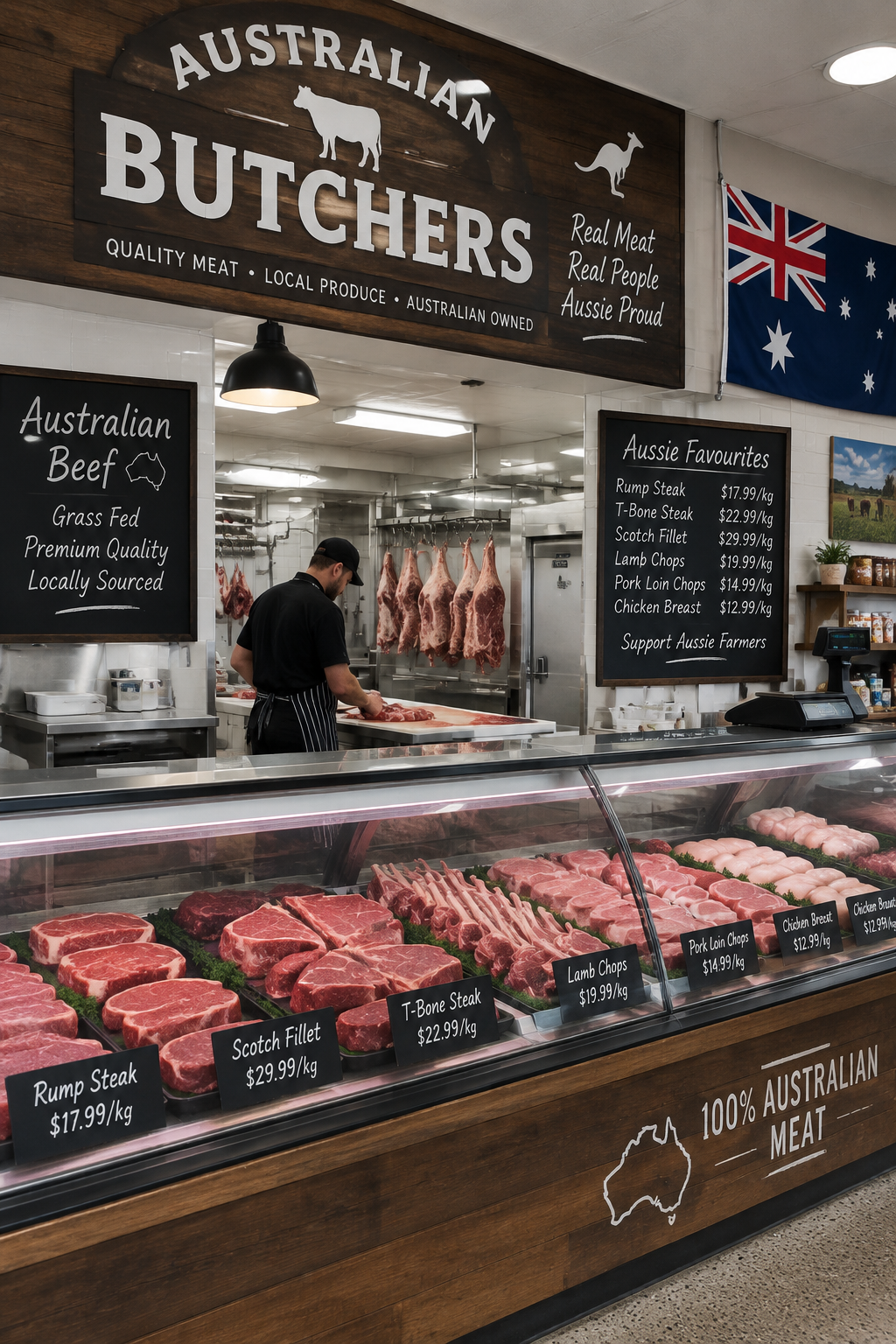
Three possible futures
The struggling traditional shop
Higher risk
Competes mainly on price, carries too much stock and depends on passing foot traffic. Margins become increasingly difficult to sustain.
The specialist neighbourhood butcher
Differentiated business
Builds a reputation for quality, knowledgeable service and products customers can’t easily replicate at the supermarket.
The hybrid food business
Different revenue streams
Combines a retail counter with online orders, prepared meals, catering, bulk packs and possibly wholesale or local delivery.
These are scenarios, not guaranteed outcomes. A business’s future will depend on its costs, location, management and customers.
My main advice
Don’t try to beat a supermarket at its own game. A small butcher is unlikely to win a long-term price war against a large retailer with enormous purchasing power.
Instead, it needs to answer three questions:
1. Why should a customer buy from us rather than Coles, Woolworths or Aldi?
2. Which products make us a worthwhile business, rather than merely keeping us busy?
3. How do we give customers enough value to keep coming back, even when our prices are higher?
A butcher who can answer those questions has a credible path forward. A butcher who sells identical products at higher prices, without a compelling reason to visit, faces a much harder future.