
Sell More, earn more:
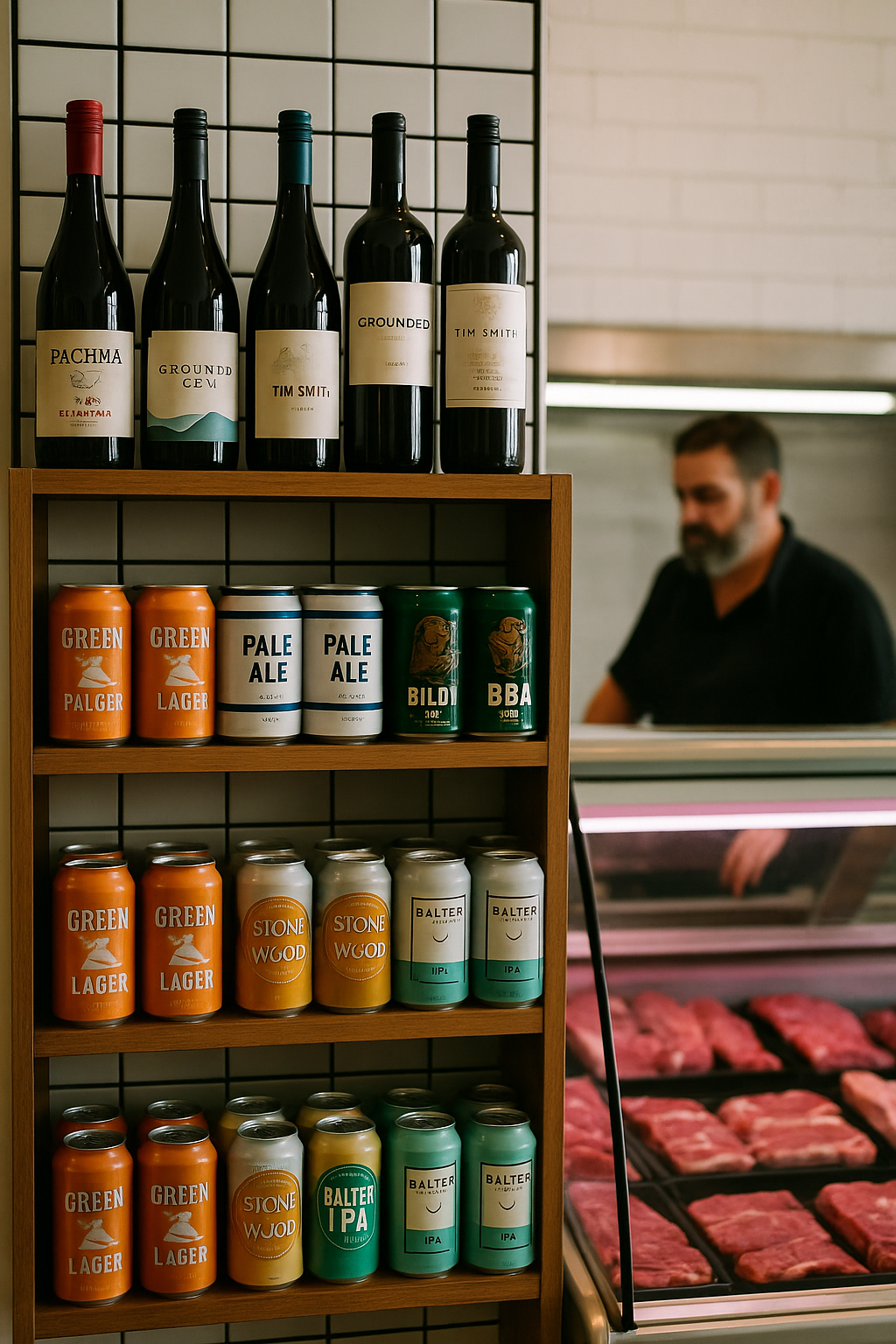
Adding alcohol can transform a butcher shop into a curated food destination — higher baskets, better margins and stronger customer loyalty. Start small: one curated wine, two craft beers and a “meal + drink” bundle. Make sure you tick the licensing box early — a simple packaged liquor licence is the typical route for take-away sales, but rules about tastings, advertising and display location vary by state. When in doubt, call your state liquor regulator with your shop details and proposed activity — they will tell you the exact licence you need .
Practical strategies that work in a butcher shop
1. Curated pairing packs
Create low-effort, high-value bundles: e.g. “Weekend BBQ Pack + 2 bottles (beer or wine)”. Price the bundle to preserve margin while showing perceived value.
Add a small premium (10–25%) for convenience and curation.
2. Cross-merchandising at point of sale
Display matching beer/wine next to the meat cuts and recipe cards (e.g., “Slow-cook beef + shiraz”). Eye-level, small signage and recipe pairings increase impulse add-ons.
3. Private label / small batch stocking
Source local beers, ciders or wines from nearby producers; negotiate trade pricing or exclusive small runs to improve margin and offer uniqueness.
4. Tastings and events (where permitted)
Host ticketed pairing nights, product launches or “butcher + brewer” evenings. Ticket revenue reduces risk and can cover staff & waste. (Check licensing rules for tastings per state — some allow tastings under packaged licences or special permits.)
5. Meal kits & ready meals with alcohol upsell
Sell pre-marinated kits or ready meals and offer a matching bottle as an add-on at checkout or online.
6. Online & click-and-collect sales
Offer alcohol for local delivery/collection (packaged liquor licences generally allow direct sales/online). This increases average order value and reaches customers who won’t pass by the shop.
7. Seasonal promotions & premiumisation
Use Christmas, Father’s Day, AFL finals etc. to upsell premium cuts paired with premium drinks (higher margin).
8. Staff training and simple scripts
Train staff to offer pairings: “Would you like a bottle of X with that ribeye? It’s a good match.” Small prompts lift conversion.
9. Shelf and margin management
Rotate SKUs; keep a small, fast-selling core range and 2–3 premium items; negotiate supplier rebates or consignment deals for slow stock.
10. Compliance & record keeping
Keep ID checks, incident logs and supplier invoices organised — non-compliance risks fines and licence loss.
Important: this is a practical summary — you should confirm details with the relevant state regulator before applying.